

Why Trailer Sway Happens and How to Stop It Safely
Trailer sway can turn a routine drive into a heart-stopping moment in seconds. Whether you’re towing a caravan, boat, or work trailer, understanding why sway happens (and how to control it) could save your life and your load.
This guide breaks down the science behind trailer sway and shows you exactly how to prevent it. We’ll also introduce you to Elecbrakes’ game-changing SwayControl technology: our intelligent, integrated solution that monitors your trailer’s behaviour and responds before you even feel the sway start.
What Is Trailer Sway and Why It’s Dangerous
Trailer sway occurs when your trailer starts swinging side-to-side behind your tow vehicle. What begins as a gentle wobble can rapidly escalate into violent fishtailing that becomes impossible to control.
The danger comes from how quickly sway builds momentum. Each sideways movement creates force that pulls your tow vehicle off course. At highway speeds, this can lead to jackknifing, rollovers, or collisions with other vehicles.
Even experienced towers can lose control once sway reaches a critical point. That’s why prevention and early detection matter far more than trying to correct severe sway after it starts.
What Causes Trailer Sway?
Understanding the triggers helps you avoid them. Here are the most common causes.
Wind gusts and passing vehicles
Large trucks create powerful air displacement that can push trailers sideways. Crosswinds have the same effect, particularly on tall caravans with large surface areas.
Incorrect weight distribution
Too much weight behind the axle creates a pendulum effect. The trailer’s rear becomes heavier than the front, allowing it to swing freely.
Speed
Higher speeds amplify every instability in your towing setup. Small wobbles at 60km/h become dangerous sway at 100km/h.
Uneven or damaged roads
Potholes, bumps, and uneven surfaces upset your trailer’s balance, triggering lateral movement.
Inadequate tongue weight
Your trailer needs 10-15% of its total weight pressing down on the towball. Too little creates instability; too much overloads your vehicle’s rear axle.
Worn or incorrect tyres
Underinflated, overloaded, or mismatched tyres reduce your trailer’s stability and ability to track straight.
What to Do Immediately When Trailer Sway Starts
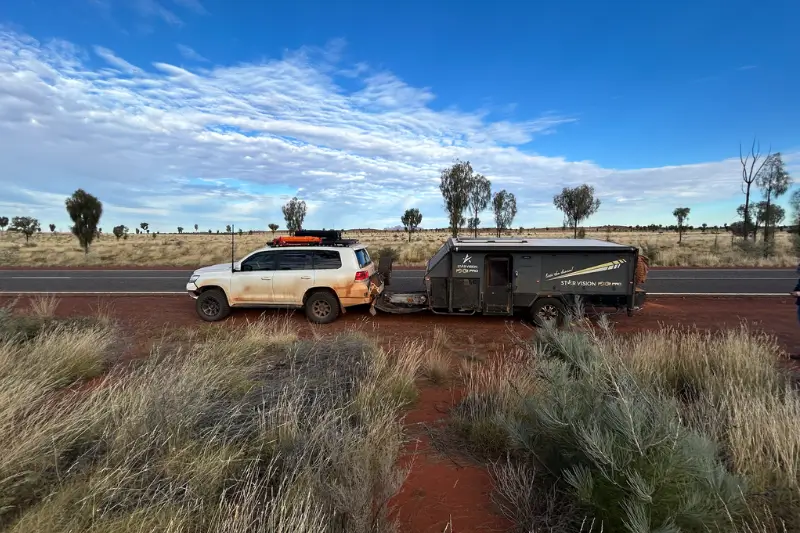
Don’t panic and don’t slam the brakes. More than often, that makes it worse. Follow these steps:
- Ease off the accelerator gradually. Let your vehicle slow naturally without sudden movements. This reduces the energy feeding the sway.
- Keep your steering straight. Don’t try to counter-steer or fight the sway. Hold the wheel steady and let the trailer settle.
- Apply trailer brakes manually (override) if you have a brake controller. This pulls the trailer back in line behind your vehicle. Avoid using your vehicle’s brakes, which can jackknife the trailer.
- Don’t accelerate to “pull out” of the sway. This old myth makes things worse by adding speed and momentum to an already unstable situation.
Once you’ve regained control, pull over safely and inspect your setup before continuing.
Best Practices for Loading and Weight Distribution
When it comes to avoiding sway, how you load your trailer matters as much as what you tow. Follow these rules:
- Place 60% of cargo weight forward of the axle. This creates downward pressure on the towball and prevents the tail-wagging effect.
- Secure heavy items low and centred. High loads raise your trailer’s centre of gravity, making it more prone to tipping and swaying.
- Distribute weight evenly left to right. Unbalanced loads create uneven tyre wear and handling problems.
- Never exceed your trailer’s ATM or GTM. Overloading compounds every other risk factor and can void your insurance.
- Check your setup before long trips. Items shift during travel. Do a walk-around at your first rest stop to ensure everything remains secure.
Sway Control Systems: What Actually Works
Traditional sway control devices fall into two categories: friction-based and active systems.
Friction sway bars attach between your vehicle and trailer, creating resistance against sideways movement. They’re cheap but crude—they can’t adapt to changing conditions and often interfere with normal cornering.
Weight distribution systems with built-in sway control use spring bars and friction pads. They work better than basic friction bars but still require manual adjustment for different loads and conditions.
Both solutions are reactive, only engaging after sway has already started.
Modern electronic stability control (ESC) technology monitors your trailer’s behaviour in real time and applies proportional braking, these electronic systems deliver protection that mechanical devices simply cannot match.
How to Tow Safely With Elecbrakes SwayControl

Elecbrakes has developed Australia’s first fully integrated SwayControl system built directly into brake controllers, meaning there’s no additional hardware, modifications, or ongoing maintenance required.
SwayControl is included in both the trailer-mounted EB2 and vehicle-mounted VM1 at no extra cost, offering intelligent sway protection that works with any trailer, any vehicle, every time you tow.
Here’s what makes Elecbrakes SwayControl different:
- Adaptive Sway Detection: Detects sway movement before you even feel it, monitoring your trailer’s behaviour in real-time to stay one step ahead.
- Proportional Response: Matches brake intensity to sway severity, applying just the right amount of braking to put you back in control.
- Custom Sensitivity Settings: Adjust sensitivity levels to match your driving style, trailer setup, and road conditions for personalised protection.
- Full System Visibility: Monitor stability and performance through the Elecbrakes App, with live data and insights that help you tow smarter.
- Australian-tested reliability: We developed SwayControl through thousands of hours of real-world testing on Australian roads, combined with extensive simulation data. The result: unparalleled stability, confidence and control on every journey.
Ready to tow safer on your next journey? Learn more about SwayControl, and explore our EB2 and VM1 brake controllers, both featuring this game-changing technology.