

Harsh Conditions Towing: Protecting Your Setup From Corrugations, Dust and Saltwater
Why harsh conditions are the biggest threat to your towing setup
Harsh conditions don’t just make towing harder – they actively wear down your setup faster than normal driving.
Corrugations shake components loose. Dust works its way into moving parts. Saltwater quietly corrodes anything exposed.
The risk isn’t usually one big failure. It’s small issues building over time:
- Fasteners loosening
- Wiring connections degrading
- Brakes losing consistency
- Components wearing unevenly
That’s why it’s so important to take extra care when towing in these environments, by preparing properly and checking your setup thoroughly before and after every trip.
Answer summary
- Corrugations, dust and saltwater accelerate wear across brakes, wiring and moving parts
- Small issues compound fast in harsh conditions – proactive checks prevent major failures
- Pre-trip prep focuses on sealing, tightening and protecting vulnerable components
- Post-trip checks focus on wear, movement and contamination
- A well-set brake controller helps maintain control when conditions become unpredictable
What corrugations actually do to your caravan and trailer
Corrugations create constant vibration that travels through every part of your rig.
This repeated movement doesn’t always affect things straight away but the impact can build over time. The vibration can loosen bolts and fittings, accelerate wear in bearings, reduce braking consistency and cause wiring fatigue or breakage.
This can affect:
- Suspension components and mounting points
- Wheel bearings and hubs
- Electrical connections
- Brake assemblies
That’s why regular checks matter – stop and inspect your setup for anything that’s loosened, shifted or worn. Catching these early keeps your towing stable and prevents bigger failures later.
How dust gets into your electrics, brakes and bearings
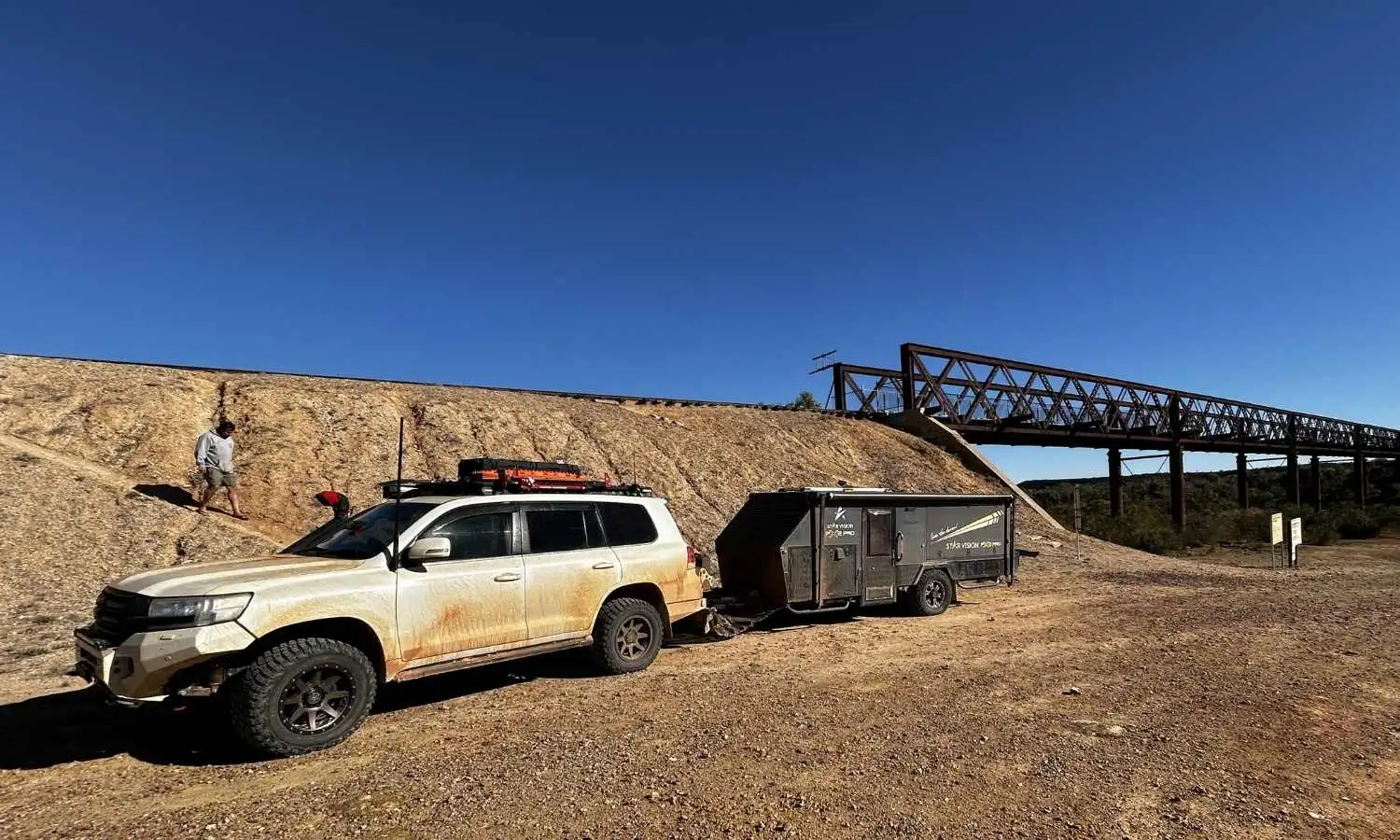
Dust is fine, persistent and gets into places you don’t expect.
You’re most likely to encounter it on unsealed roads, outback tracks, dry regional highways, construction zones and anywhere traffic is kicking up fine particles into the air. Even short stretches of dirt road can push dust deep into your setup, especially around wheels, hubs and exposed wiring.
Once inside, it acts like an abrasive that slowly wears components down. It doesn’t usually cause immediate failure, but it changes how things perform over time.
- In brakes, it reduces smooth contact and can cause uneven wear
- In bearings, it contaminates grease and increases friction
- In connectors, it affects signal reliability
The signs are often subtle at first. Braking may feel slightly less smooth, connections may become inconsistent, and parts can wear faster than expected without an obvious cause.
Because dust is hard to avoid, the focus shifts to managing it. Regular inspection, cleaning and checking for early changes in performance will help you catch issues before they affect how your trailer tows.
Saltwater and coastal driving: the corrosion risk most towers miss
Saltwater exposure is one of the fastest ways to shorten the life of your towing setup.
It’s not just immersion that causes problems. Direct contact, like launching a boat or driving through saltwater, is the highest risk, but coastal air can also have an impact over time. If you’re regularly towing within a few hundred metres of the ocean, or parking near the beach, fine salt particles in the air can settle on exposed components and slowly start the corrosion process.
Even brief exposure can start corrosion on:
- Brake components
- Electrical connectors
- Suspension hardware
- Chassis surfaces
The challenge is that corrosion doesn’t always show immediately. It builds gradually, weakening parts, affecting connections and reducing long-term reliability.
If your trailer has been in or near saltwater, rinsing it off with fresh water as soon as possible is critical, especially around brakes, hubs and wiring. If you live near the coast, regular wash-downs and visual checks should be part of your routine, even if the trailer hasn’t been submerged.
Salt exposure is easy to underestimate because it’s not always visible straight away. Managing it early is what prevents it becoming a bigger issue later.
Pre-trip checklist: get your setup ready for rough conditions

Before heading into harsh conditions, your focus should be on protection, stability and sealing.
Corrugations, dust and salt don’t give you much warning. Once you’re on the road, small weaknesses get exposed quickly, so this is your chance to catch issues while they’re easy to fix.
Start by working through the parts of your setup that are most likely to loosen, wear or be exposed:
- Tighten anything that can loosen – check suspension mounts, U-bolts, brackets and any visible fasteners for movement or play
- Protect exposed electrical points – make sure plugs are firmly seated, connections are clean, and any exposed wiring is secured and shielded where possible
- Confirm smooth braking under load – do a low-speed test with your fully loaded setup and make sure braking feels even and progressive, not jerky or delayed
- Set tyre pressures for the terrain – adjust slightly for corrugations or unsealed roads to reduce harsh impact and improve stability
As you go, pay attention to anything that doesn’t feel quite right. A loose connection, slight movement or inconsistent braking is much easier to deal with now than when you’re hours into a remote drive.
This step matters because harsh conditions don’t just create problems – they amplify them. A setup that feels “good enough” on sealed roads can quickly become unpredictable on rough surfaces.
A few focused checks before you leave help keep your towing controlled, reduce wear on key components and give you confidence that your setup will handle what’s ahead.
Pre-trip vs post-trip checks: what to look at and when
The same components take the most stress before, during and after harsh conditions — what changes is how you check them.
Use this quick reference to focus your checks at the right time. Before a trip, you’re confirming everything is secure and working as it should. After a trip, you’re looking for what’s changed, worn or worked loose.
| Component | Pre-trip check | Post-trip check |
|---|---|---|
| Brakes | Confirm smooth response under load | Check for noise, pulling or uneven braking feel |
| Wiring and connectors | Secure connections and protect from exposure | Inspect for dust ingress or corrosion |
| Bearings and hubs | Check for smooth rotation and correct lubrication | Listen for noise and check for heat |
| Suspension | Inspect mounts and tighten components | Look for movement or loosened parts |
| Tyres | Set pressure for conditions and inspect wear | Check for damage or uneven wear |
| Coupling hardware | Confirm secure connection and no play | Inspect for movement or wear |
| Chassis and underbody | Check for visible damage or loose fittings | Inspect for impact marks, corrosion or buildup |
Post-trip maintenance: what to check after harsh roads
After driving in tough conditions, it’s best to assume your setup has shifted, loosened or taken on contaminants in some way – even if everything still feels fine.
This is where you reset your rig. A quick, thorough check helps you catch wear early, prevent long-term damage and make sure everything is ready for the next trip.
Start with the areas most affected by movement and exposure:
Check for loosened components
- Re-tighten bolts, mounts and fittings, especially around suspension, brackets and coupling points
- Look for movement or fresh wear marks
Inspect braking performance and condition
- Notice if braking feels less smooth or consistent than before
- Check around wheels for dust, dirt, or debris buildup, or uneven wear
Look at wiring and connectors
- Check for dust, moisture or early corrosion in plugs and connections
- Make sure wiring is still secure and hasn’t rubbed or come loose
Assess tyres and suspension
- Look for uneven wear, cuts or damage on tyres
- Check shocks, springs and mounts for movement or leaks
Check bearings and hubs
- Feel for excess heat after a drive
- Listen for grinding or humming
Inspect coupling and contact points
- Check tow ball, coupling and safety chains for wear or movement
- Confirm everything connects firmly with no play
Wash down if exposed to dust or salt
- Rinse off dust, mud or salt, focusing on brakes, hubs and undercarriage
Listen for early warning signs on your next drive
- Pay attention to new noises, vibration or changes in how the trailer tracks
These checks are about understanding how your setup has responded to the conditions – and making small fixes in the short term so they don’t turn into bigger problems on your next trip.
Why your brake controller matters more in tough conditions

In harsh conditions, braking performance becomes more noticeable — and more critical to control.
Corrugations, loose gravel and uneven surfaces can cause the trailer to react unpredictably under braking. What feels stable on sealed roads can quickly turn into pushing, lagging or instability when conditions change.
A properly adjusted electric brake controller helps by:
- Delivering consistent and proportional braking across rough and loose surfaces
- Reducing the chance of the trailer pushing on descents or over corrugations
- Letting you fine-tune braking response as terrain and load shift
With Elecbrakes brake controllers, features like proportional braking help keep the trailer aligned with the vehicle, while built in SwayControl adds an extra layer of stability when surfaces are less predictable.
Braking should still feel smooth and controlled, even on rough roads. If it starts to feel inconsistent, delayed or grabby, it’s a sign your setup or settings need attention.
FAQ – towing in harsh conditions
What tyre pressure is needed for corrugations?
Tyre pressure is typically reduced slightly to help absorb vibration and improve traction. The exact number depends on your setup, but the goal is to reduce harsh impact without overheating the tyres.
What is the best suspension for corrugated roads?
A heavy-duty suspension matched to your load performs best on corrugated roads. But even the best setup won’t work well if it’s worn or loose, so regular checks of shocks, mounts and fasteners are just as important as the suspension type.
What are common towing mistakes in harsh conditions?
The most common mistakes are towing too fast, skipping post-trip checks and not adjusting tyre pressure or braking for conditions.
Can you tow a caravan in high winds?
Yes, but stability becomes critical. Reducing speed and ensuring balanced weight and braking response helps maintain control.
Is it better to tow a caravan in 4WD or 2WD?
4WD provides better traction in loose or uneven conditions, but both can tow effectively when the setup is correct.
Keep your setup protected on every trip
Harsh conditions are part of the towing experience when travelling through Australia or New Zealand. Successful trips come down to how you prepare and how you respond afterwards.
That means tightening, sealing and testing your setup before you go, then checking for wear, movement and contamination once you’re done. When your setup is maintained properly, towing feels controlled, stable and predictable – even when the environment isn’t.
Elecbrakes is built to support that control, with braking performance you can adjust as conditions change, helping you stay confident wherever the road leads.