

How to Tow Downhill: Engine Braking, Brake Fade & Controller Settings
Towing downhill is harder than towing uphill because gravity is constantly pushing your trailer forward. On long descents, your brakes don’t get a break – and heat builds fast.
Whether you’re coming down the Great Dividing Range, heading into Alpine Victoria, or rolling through the Adelaide Hills, the difference between a calm descent and a stressful one comes down to three things:
- The gear you select
- How you use engine braking
- How your brake controller is set
Get those right, and you stay in control. Get those wrong, and brake temperatures can climb fast – which increases the risk of brake fade.
Your downhill towing checklist
- Select a low gear before you start descending – usually the same gear you would climb in
- Use engine braking to hold your speed, not your brake pedal
- Avoid riding the brakes – brake firmly, then release
- Make sure your trailer brakes are contributing without locking
- If you smell heat or feel fade, pull over early and let everything cool
Why towing downhill is more demanding than it looks
Towing downhill is demanding because the trailer’s weight is pushing forward the entire time, increasing load on both your vehicle and trailer brakes.
On flat roads, braking is momentary. On steep descents, braking can become continuous if you’re not careful. That’s when heat builds – and heat is what leads to brake fade.
With more combined weight and more forward momentum, there’s simply less margin for error. That’s why downhill towing needs a thoughtful approach, before you start your descent, so you can tow with confidence.

What is brake fade and why does it happen when towing?
Brake fade is a reduction in braking performance caused by heat build-up in the braking system.
When brakes get too hot:
- Stopping distances increase
- Pedal feel changes
- Braking force becomes inconsistent
When towing a caravan or trailer, fade risk increases because you’re managing more mass. If the trailer isn’t contributing enough braking force, the tow vehicle does too much work. If both are working continuously on a long descent, temperatures rise quickly.
Brake fade typically develops gradually, which is why it’s important to manage speed early and use engine braking to reduce strain on the system.
What gear should you use when towing downhill?
Use the same gear you would use to climb the hill – often 2nd gear or “L” on steep descents.
Selecting a lower gear:
- Increases engine braking
- Helps hold speed without constant pedal input
- Reduces strain on friction brakes
Quick gear selection tips
- Automatic vehicles: select manual mode, 2nd, or L before the descent
- Vehicles with Tow/Haul mode (vehicle transmission setting): engage it, then still select a lower gear if needed
- Manual vehicles: downshift early, not mid-slope
The key rule is simple: don’t start the descent in a high gear and try to correct it halfway down. Choose your gear before gravity takes over.
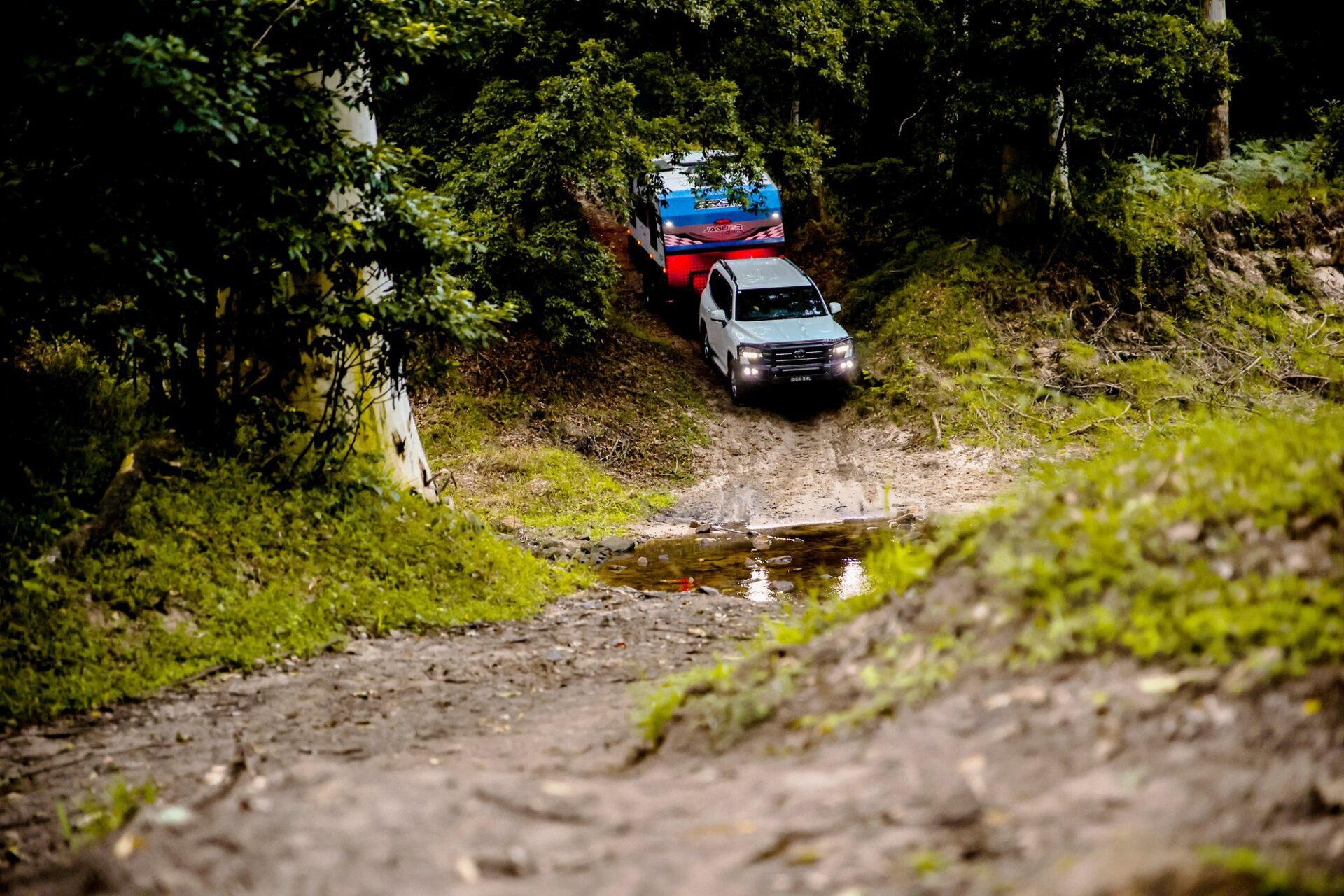
How to use engine braking when towing a caravan
Engine braking uses the resistance of your engine to help slow the vehicle, reducing how much work your service brakes need to do.
Here’s how to use it effectively:
- Slow down before the hill begins
- Select your lower gear early
- Allow the engine to help control and maintain your speed
- Use short, firm brake applications only when you need to reduce speed further
Engine braking should be doing most of the speed control on a descent, while your brake pedal is used to fine-tune and adjust as needed.
If you find yourself holding steady pressure on the brake pedal for long periods, it’s a sign you may need a lower gear. Continuous braking is what leads to unnecessary heat build-up.
How to set your brake controller for steep descents
Your brake controller should be set so the trailer shares the braking load without locking up.
On steep descents:
- If the trailer feels like it’s pushing the vehicle during braking, you may need slightly more gain (or Forward Response in the Elecbrakes app)
- If the trailer wheels lock or feel grabby, reduce gain slightly
You want smooth, balanced braking where:
- The tow vehicle isn’t doing all the work
- The trailer brakes apply firmly without locking or jerking
Correct brake setup still matters before any trip. Always test on flat ground at low speed before heading into steep terrain.
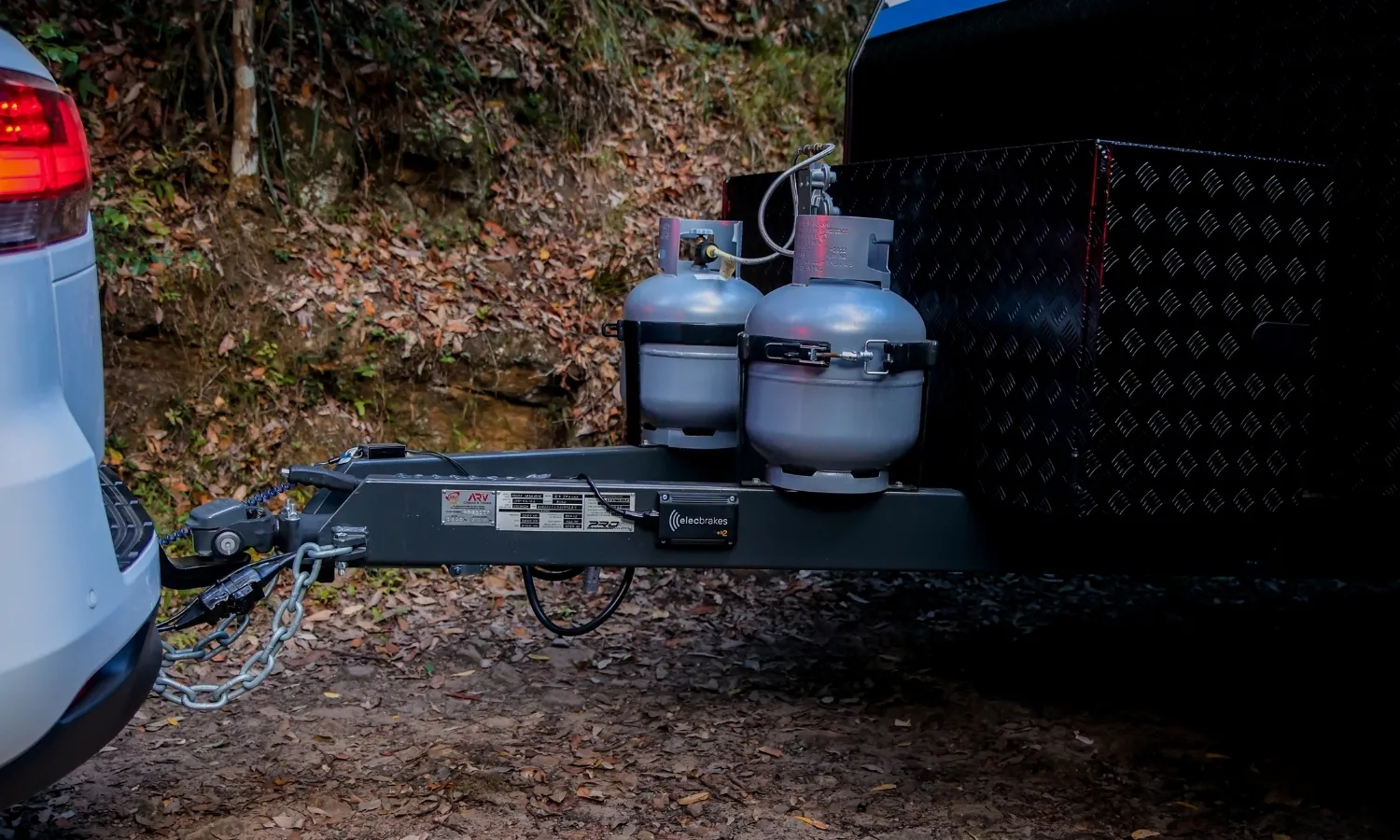
Correct brake setup reduces heat build-up and improves stability on long descents. Elecbrakes brake controllers include Dynamic Slope Compensation (DSC), which automatically adjusts electric trailer brakes based on whether you’re travelling uphill or downhill. This keeps braking smooth and balanced, helping prevent the trailer pushing the vehicle on steep descents or dragging on climbs.
Because DSC adjusts braking output as the slope changes, drivers don’t need to manually alter settings. When the Elecbrakes brake controller is correctly set up, the tow vehicle and trailer brakes work together to share the load efficiently, reducing the need to rely on manual override during downhill towing.
Combined with Elecbrakes’ integrated SwayControl, which helps manage trailer instability, it provides an extra layer of confidence when conditions get demanding.
Warning signs your trailer brakes are overheating
Brake overheating gives warnings. You just need to recognise them early.
Watch for:
- A strong, hot brake smell
- A softer or changing brake pedal feel
- Needing more pedal pressure to slow down
- Braking performance gradually decreasing
If you notice any of these:
Pull over at the next safe opportunity and let the brakes cool completely.
Do not try to “push through” to the bottom of the hill. Heat compounds quickly on long descents.
A safe, step-by-step approach for long steep descents
Before descending major mountain roads – like Alpine Victoria passes or long Great Dividing Range grades – follow this checklist.
Safe descent checklist
- Reduce speed before the hill starts
- Select the correct low gear early (often 2nd or L)
- If your vehicle has a Tow/Haul mode, engage it as well.
- Let engine braking hold your speed
- Use firm, short brake applications – then release
- Maintain a larger following distance
- Monitor for smell, fade or pedal change
- Use slow vehicle bays if needed
Safe downhill towing is about control from the top – not correction at the bottom.
Frequently asked questions
How do you tow a caravan downhill safely?
Select a low gear early, use engine braking to hold speed, avoid riding the brakes, and ensure your trailer brakes are correctly set to share the load.
What is brake fade and how do I stop it?
Brake fade is reduced braking performance caused by heat. Prevent it by controlling speed early, using engine braking, and avoiding continuous brake use on long descents.
Should I use engine braking when towing a caravan?
Yes. Engine braking reduces reliance on friction brakes and lowers the risk of overheating during long downhill runs.
How do I set my brake controller for downhill driving?
Set gain so the trailer contributes smoothly without locking. If the trailer pushes during braking, increase slightly. If it grabs or locks, reduce slightly. Always test before steep terrain.
Can electric trailer brakes overheat on steep roads?
Yes. Any friction-based braking system can overheat if used continuously. That’s why gear selection and engine braking matter.
What gear should I use when towing downhill?
Use the same gear you would climb the hill in – often 2nd gear or L on steep grades.
How do I know if my trailer brakes are getting too hot?
A strong smell, softer pedal feel, and reduced braking effectiveness are early warning signs. Pull over and allow the system to cool.