

Wet-Weather Towing: Keep Electric Trailer Brakes Reliable
Towing in the rain changes how your trailer behaves. Wet roads reduce grip, heavy spray affects braking feel, and mud can interfere with consistency. The good news? Electric trailer brakes are built to operate in wet weather – you just need to adjust how you drive and monitor performance more closely.
Whether you’re towing a caravan, boat or work trailer, understanding how electric trailer brakes perform in wet weather is the difference between reacting late and staying safe and in control.
Quick answer – wet weather towing Australia
- Electric trailer brakes do work in the rain – but stopping distances increase.
- Water and mud reduce friction and can slightly delay response.
- Only adjust brake controller gain if needed – start with small incremental changes.
- Increase following distance and brake earlier in wet conditions.
- Clean and inspect brakes after towing in heavy rain or mud.
Do electric trailer brakes work in the rain?
Yes – electric trailer brakes work in the rain, but reduced friction and wet road surfaces mean that your vehicle and trailer need more road space to come to a complete stop.
Most caravans and trailers in Australia use electric drum brake assemblies at the wheels, which are common in wet weather towing around Australia. These systems are enclosed and designed to operate in normal wet-weather towing conditions. However, rain changes two important factors:
- Tyre grip on wet bitumen decreases.
- Moisture inside the brake assembly can temporarily reduce friction until heat dries it out.
The first brake application after driving through heavy spray or puddles may feel slightly softer. That does not mean your braking system has failed – it means conditions have changed.
Caravan towing rain safety starts with accepting that stopping distances will be longer than in dry conditions.
What rain, road spray and mud really do to your trailer brakes

Rain, spray and mud reduce braking consistency and can slow initial brake response.
Water lowers friction between the brake shoe and drum until heat builds. On wet highways, heavy spray from trucks can keep components damp for longer. In muddy conditions, debris can pack around moving parts and interfere with smooth engagement.
When towing, this can feel like:
- Slight delay when you first apply the brakes
- The trailer pushing forward more than usual
- Minor inconsistency in braking strength
- Noise after muddy sections
These effects are usually temporary. But if mud is left to dry and harden around components, it can cause uneven wear and long-term performance issues.
Should you adjust your brake controller in wet weather?
In some cases, yes – but adjustments should be small and deliberate. A proportional brake controller like Elecbrakes allows you to fine-tune braking output to match changing conditions.
If your trailer feels like it is pushing under moderate braking in wet conditions, a slight increase in brake controller gain or Forward Response may help restore balance. Reduced friction means slightly more braking force may be needed to achieve the same stopping performance.
However, too much gain in wet weather can cause trailer wheel lock-up. Locked wheels reduce control and increase instability, particularly on slick surfaces.
The safest process is:
- Begin with your normal dry-weather setting.
- Monitor braking feel during moderate stops.
- If needed, increase gain slightly.
- Test changes at low speed before returning to highway conditions.
Driving technique should always be your first adjustment. Brake controller settings fine-tune performance – they do not replace safe driving.
How to drive safely when towing a caravan in the rain
Safe caravan towing in rain is about anticipation. When you drive with space, patience and steady inputs, your electric trailer brakes can do their job effectively – even in poor weather.
When roads are wet, every input must be smoother and earlier than usual. Speed becomes your biggest risk factor. The faster you travel, the less margin you have when grip drops or braking response changes.
Increase your following distance well beyond what you would allow in dry conditions. Brake earlier, not harder. Avoid sharp steering corrections. Let the combination of vehicle and trailer settle under steady, controlled inputs.
If you feel the trailer begin to push, do not panic brake. Ease off slightly, stabilise, and apply smooth, progressive braking instead.
Pre-trip checks before towing in wet or muddy conditions
Before heading out in wet weather towing conditions, confirm:
Electrical connections
- Trailer plug clean and secure
- No corrosion on pins
- Wiring intact and properly routed
Brake condition
- Brake shoes within service limits
- No visible contamination
- Drums free of excessive wear
Trailer tyres
- Adequate tread depth for wet grip
- Correct cold tyre pressures
Breakaway battery
- Fully charged
- System operational
Low-speed brake test
After connecting, perform a controlled brake test at low speed to confirm:
- Smooth engagement
- No pulling
- No abnormal noise
On-road warning signs your trailer brakes are struggling in the wet
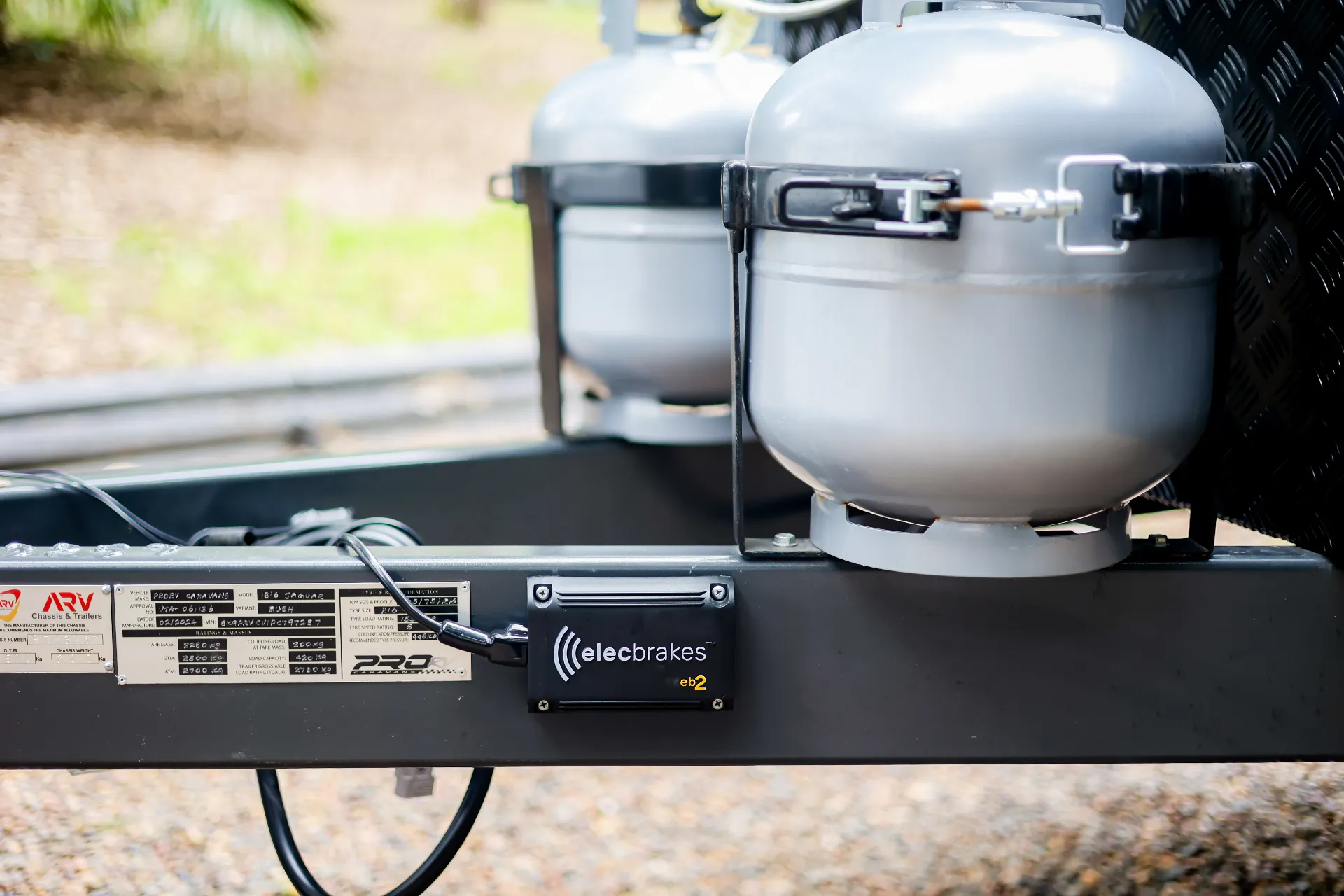
Watch for clear, observable signs:
- Noticeable trailer push during braking
- Pulling to one side
- Delayed stopping response
- Grinding or squealing after muddy sections
- Reduced braking effect despite controller output
If any of these occur:
- Reduce speed immediately
- Increase following distance
- Avoid heavy braking
- Stop safely to inspect when practical
Persistent performance issues after conditions improve may indicate contamination or wear requiring service.
Post-trip maintenance after towing in rain or mud
After towing in heavy rain or muddy conditions, maintenance protects long-term brake reliability.
Rinse mud and debris
Use low-pressure water to remove mud from:
- Backing plates
- Drum areas
- Suspension components
Avoid directing high-pressure water into sealed areas.
Allow components to dry
A short, controlled drive with light brake application can help dry internal surfaces.
Inspect visually
Check for:
- Loose wiring
- Debris buildup
- Uneven tyre wear
Reconfirm braking feel
On your next drive, confirm normal braking response has returned.
Consistent post-trip inspection keeps your electric trailer brakes reliable, even after challenging wet-weather towing conditions. With smart maintenance and steady driving, nothing stands between you and the next adventure.
Frequently asked questions
Do electric trailer brakes work in the rain?
Yes. Electric trailer brakes are designed to operate in wet conditions, but stopping distances increase due to reduced friction and tyre grip.
How do I adjust my brake controller for wet weather?
Start with your normal setting. If the trailer feels like it is pushing, increase gain slightly and test at low speed. Avoid dramatic changes.
Why do my trailer brakes feel different when it’s raining?
Water temporarily reduces friction inside the drum and wet roads reduce tyre grip, changing braking feel.
What should I check before towing in wet conditions?
Check electrical connections, brake wear, tyre tread, breakaway battery charge and perform a low-speed brake test.
Can mud affect electric trailer brakes?
Yes. Mud can interfere with smooth brake engagement and cause uneven braking if not cleaned after the trip.
How do I maintain electric trailer brakes after a wet trip?
Rinse mud, allow components to dry, inspect wiring and tyres, and confirm braking performance on your next drive.
Is it safe to tow a caravan in heavy rain?
Yes – if you reduce speed, increase following distance, drive smoothly and ensure your braking system is functioning correctly.
Reviewed and validated by Tow-Ed
This article has been reviewed and validated by Tow-Ed, a Registered Training Organisation which provides nationally recognised competency based towing education, seminars, workshops, and consultancy to manufacturers and the public for over 25 years. Tow-Ed operates training throughout Australia via an incredible Tow-Ed training network.